
Ecosystem Koi Ponds & Garden Pond Builders Manchester
Natural-looking ecosystem ponds, koi ponds, waterfalls, and bespoke water features across Manchester and Cheshire.
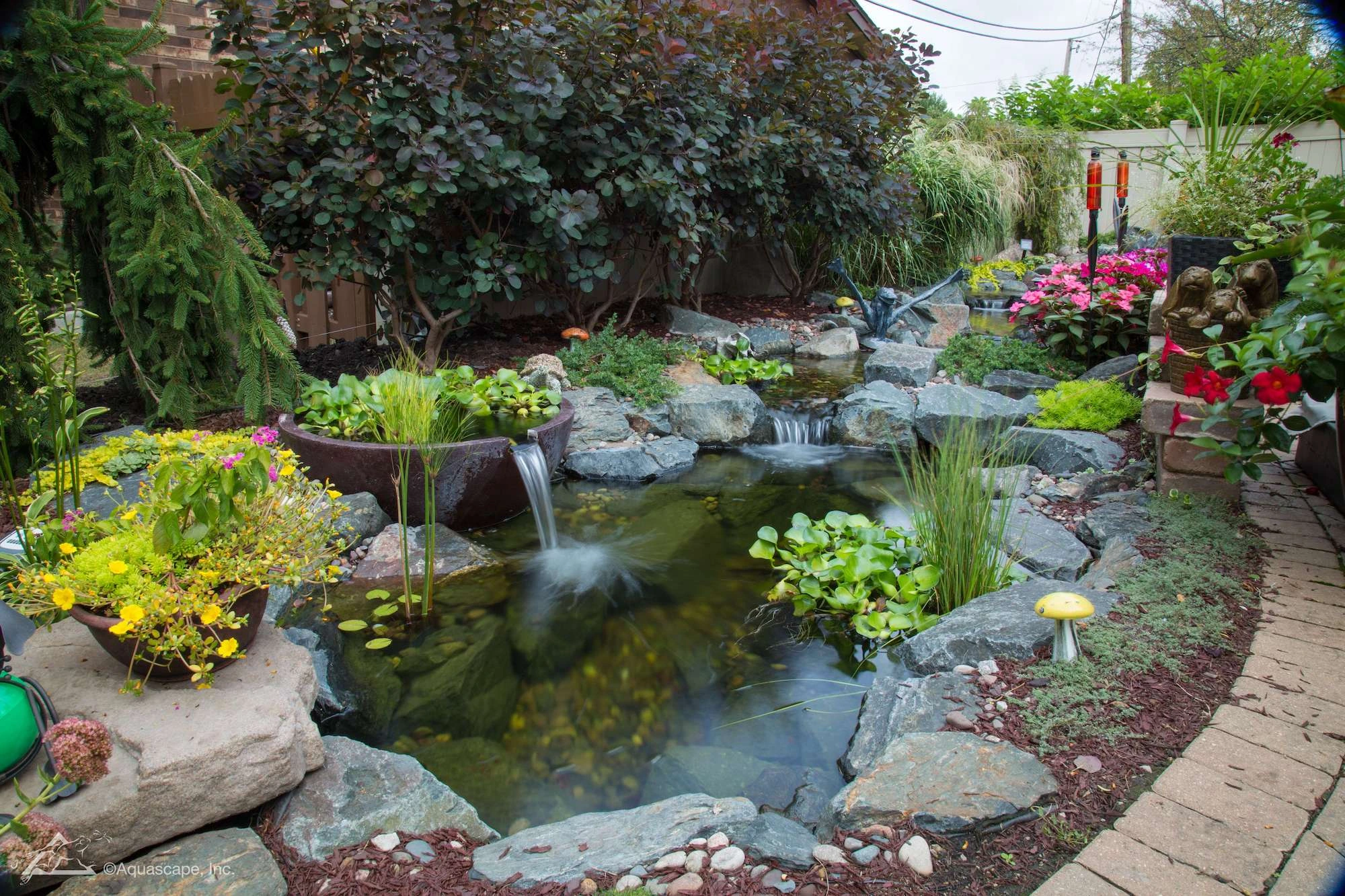
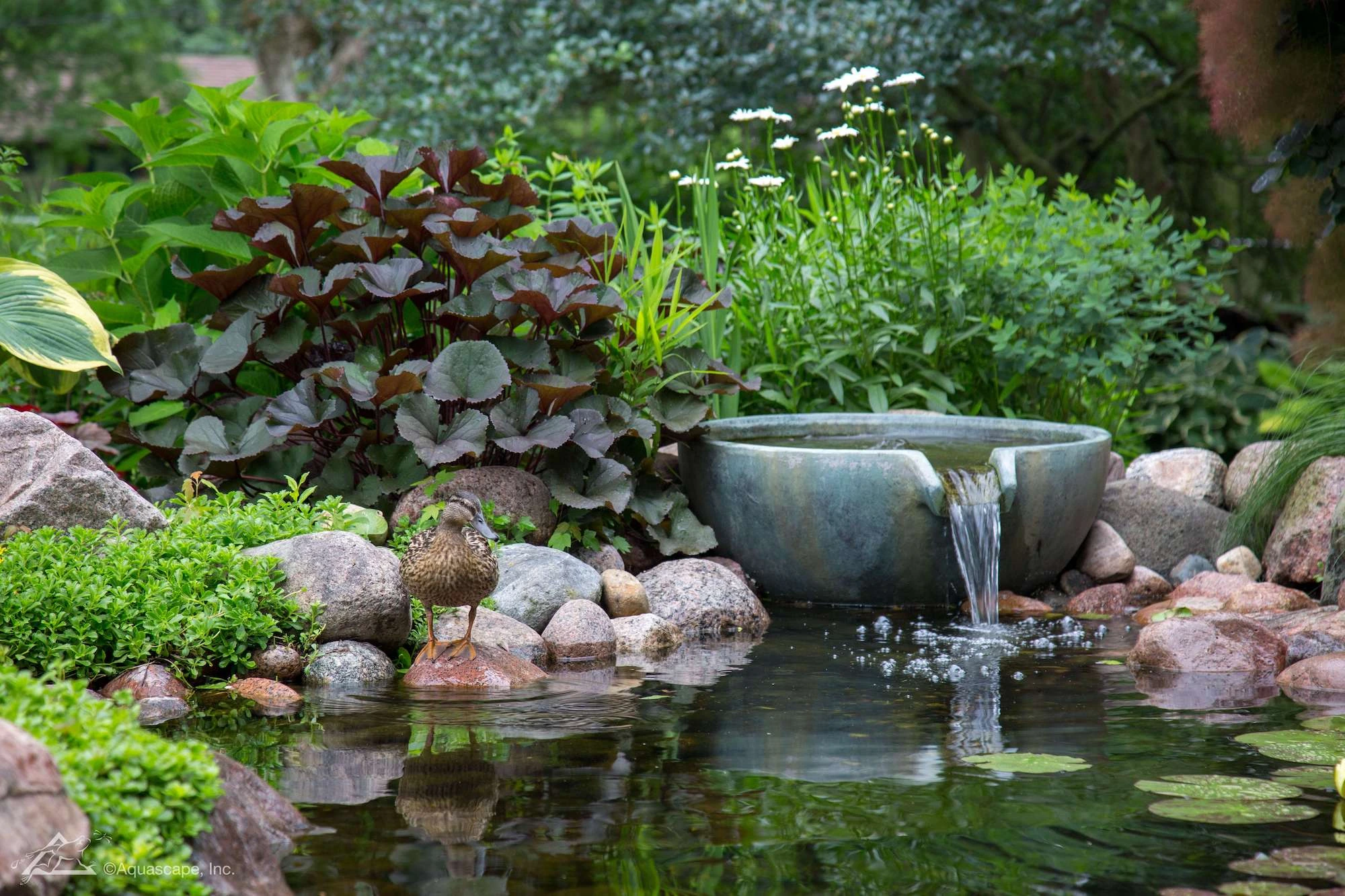
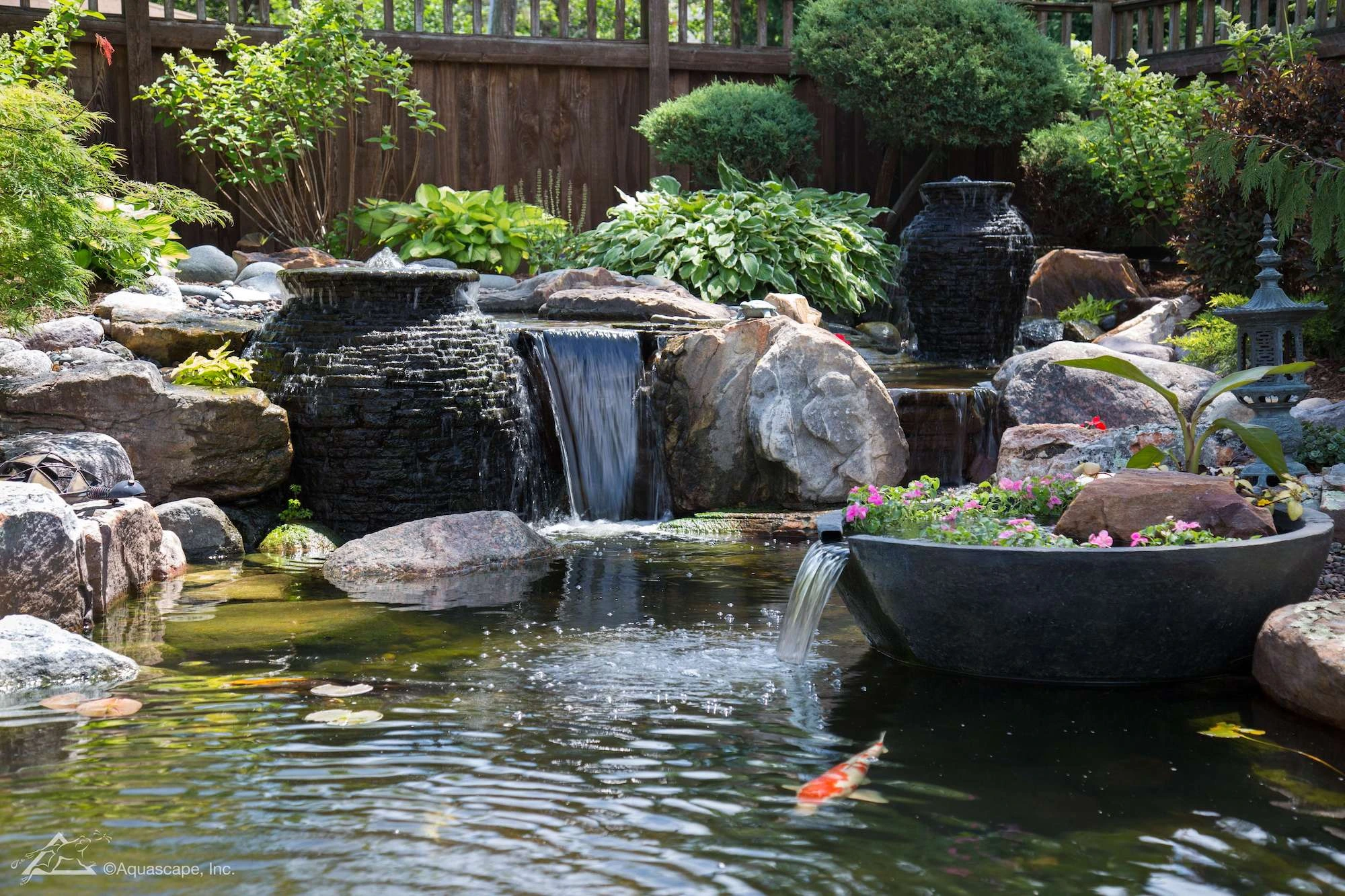
At Olympian Water Gardens, we specialise in Aquascape ecosystem ponds designed to combine natural beauty with low-maintenance filtration.
Unlike traditional formal koi ponds, our ecosystem ponds blend waterfalls, streams, aquatic planting, and natural rockwork to create healthy environments for koi and wildlife while becoming part of the overall garden design.
We build bespoke ecosystem koi ponds, wildlife ponds, recreational ponds, and natural water features throughout Manchester, Cheshire, Wilmslow, Hale, Knutsford, Oldham, and surrounding areas.
Why Choose an Ecosystem Koi Pond?
Traditional koi ponds often focus heavily on exposed filtration systems, formal construction, and technical equipment. Our ecosystem koi ponds are designed differently — combining healthy environments for koi with natural landscaping, waterfalls, planting, and balanced biological filtration.
Benefits of an ecosystem pond include:
• Natural-looking water gardens
• Reduced visible equipment
• Healthy environments for koi and pond fish
• Waterfalls and streams for oxygenation
• Wildlife-friendly planting
• Low-maintenance filtration systems
• Crystal clear water using natural balance
• A relaxing outdoor space to enjoy all year round
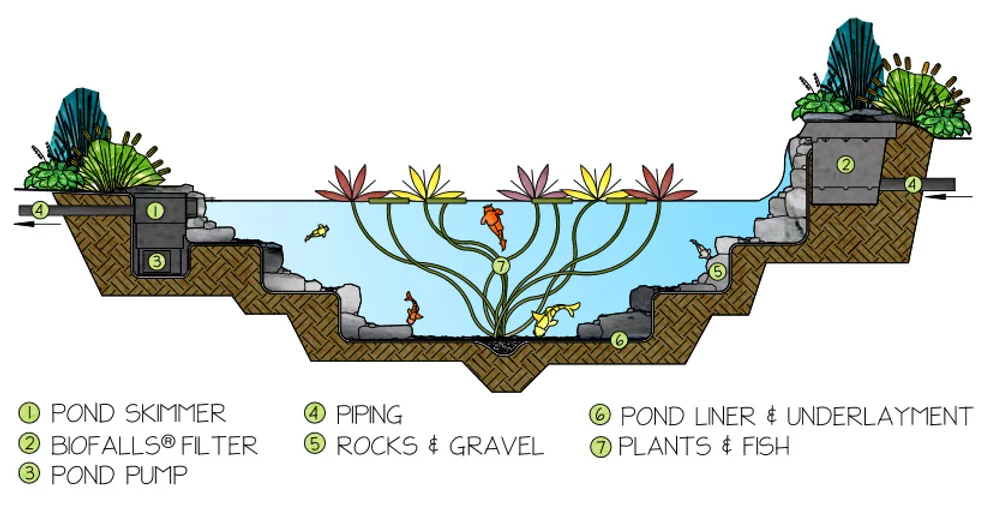
How Our Ecosystem Ponds Work
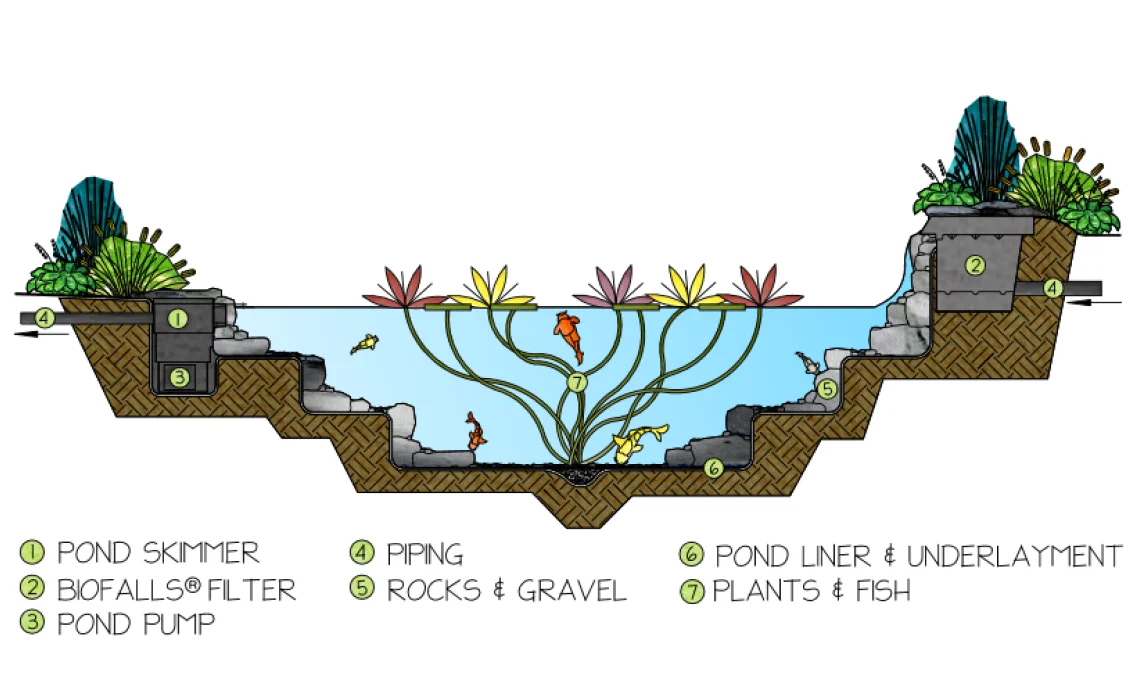
Aquascape ecosystem ponds work with nature rather than against it. Water is circulated through biological and mechanical filtration before returning to the pond through waterfalls and streams, helping oxygenate the water naturally.
Aquatic plants, gravel, beneficial bacteria, and natural rockwork all work together to maintain clear, healthy water for koi and wildlife while reducing maintenance compared to many traditional pond systems.

Natural Filtration & Water Movement
Moving water is one of the key parts of a healthy ecosystem pond. Streams, waterfalls, and circulation systems help oxygenate the pond while supporting natural biological filtration.
Our ponds are designed to feel balanced and natural while remaining practical and easy to maintain.

Bespoke Ecosystem Koi Ponds
Every pond we build is custom designed to suit the garden, surrounding landscaping, and the client’s goals. Whether you are looking for a dedicated ecosystem koi pond or a more natural recreational water garden, we design each feature to blend naturally into the outdoor environment.
We use natural stone, gravel, aquatic planting, waterfalls, streams, and carefully designed circulation systems to create ponds that feel established and timeless.

Enjoy Your Pond All Year Round
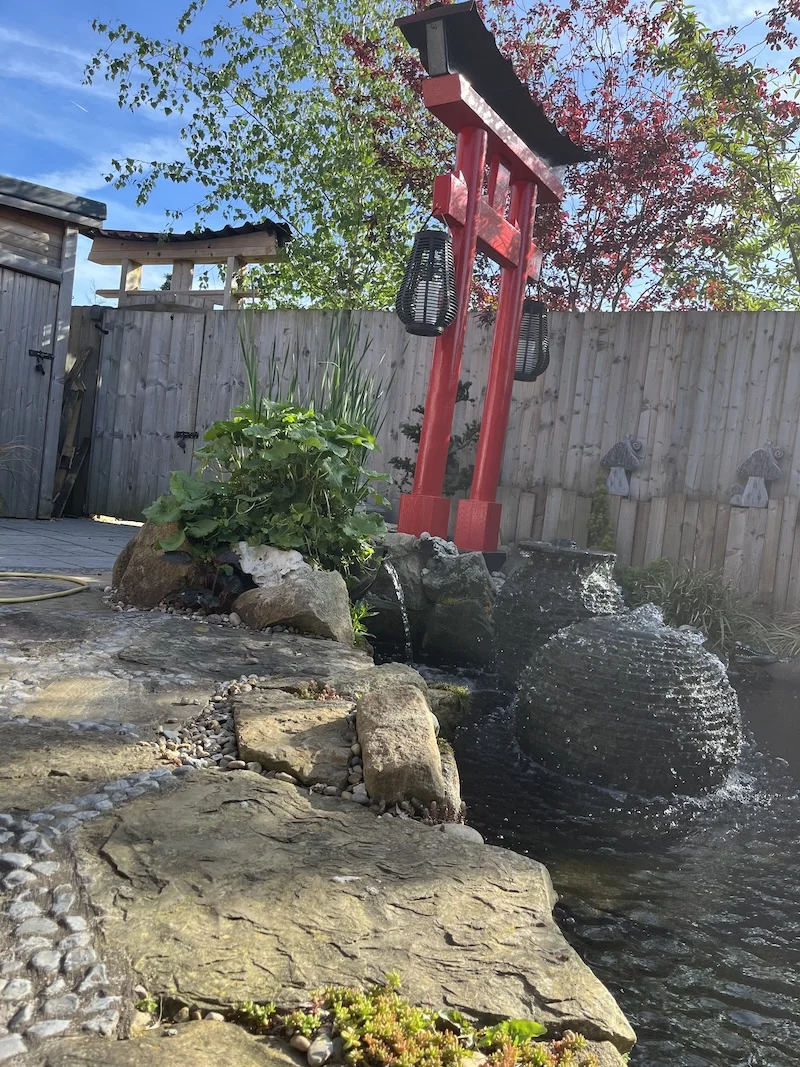
A well-designed ecosystem pond becomes part of the garden throughout every season. Water movement, lighting, planting, reflections, and natural textures create interest all year round — even through winter.
Many of our clients use their ecosystem ponds as focal points for relaxation, entertaining, and enjoying wildlife in the garden.


Certified Aquascape Contractor Manchester
Olympian Water Gardens is a Certified Aquascape Contractor specialising in ecosystem ponds, pondless waterfalls, koi ponds, and bespoke water features throughout Manchester and Cheshire.
We focus on natural-looking, low-maintenance water features that work with nature while enhancing outdoor living spaces.
Ecosystem Koi Ponds & Garden Pond Builders Manchester
What is an ecosystem pond?
An ecosystem pond is designed to work with nature using waterfalls, streams, aquatic plants, gravel, and biological filtration to create healthy, balanced water conditions for fish and wildlife.
Are ecosystem ponds good for koi?
Yes. Ecosystem ponds provide a natural environment for koi with improved oxygenation, natural filtration, and plenty of space for aquatic planting, waterfalls, and circulation.
Are ecosystem ponds difficult to maintain?
A properly designed ecosystem pond is generally lower maintenance than many traditional formal pond systems, using natural biological balance and planting to help maintain clear, healthy water.
Areas Covered:
Manchester • Cheshire • Wilmslow • Hale • Knutsford • Altrincham • Oldham • Stockport • Surrounding Areas
Contact us today